

The Challenge
Reliable, Low-Noise Backup for a Busy Warehouse
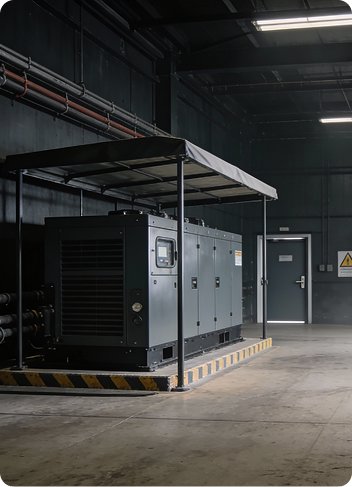
The warehouse was experiencing frequent utility dips that stopped conveyors, scanners, and WMS terminals costing time at the docks. Any solution had to meet a strict boundary noise limit, fit within a tight yard with active forklift lanes, and be installed over a single weekend to avoid peak shipping days. The client also needed automatic transfer, fuel autonomy for a full day’s operation, and remote status alerts so facilities could react before issues became downtime.
The Solution
Rapid Deployment of a 250 KVA Canopied
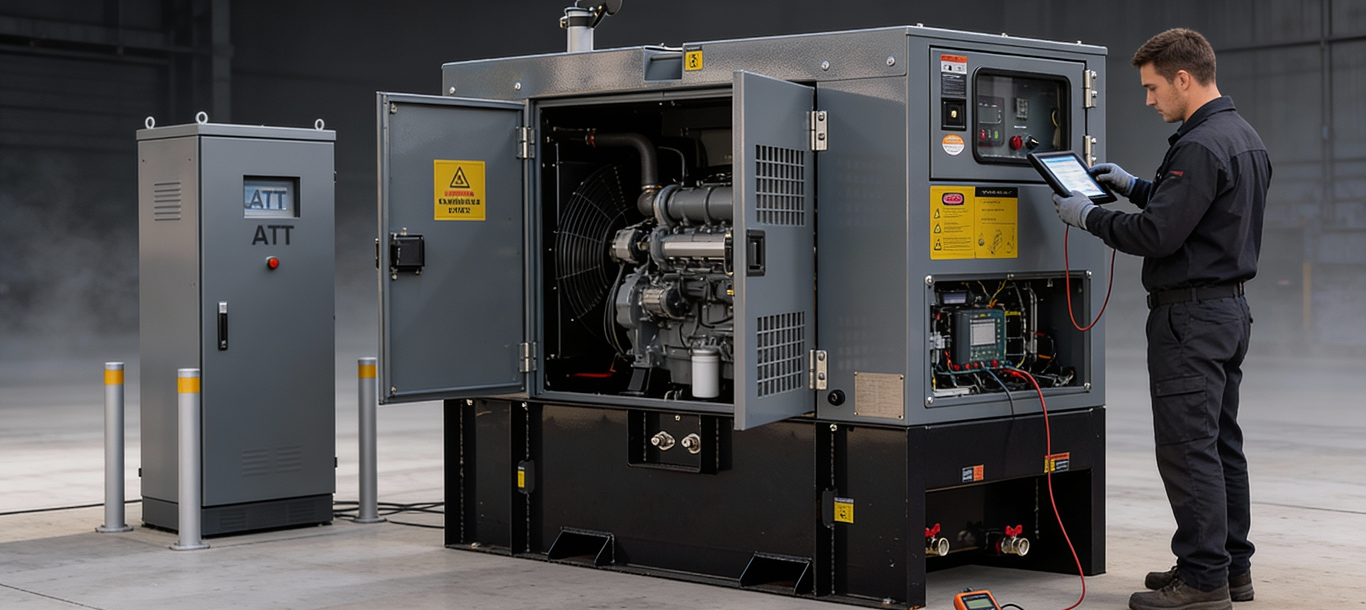
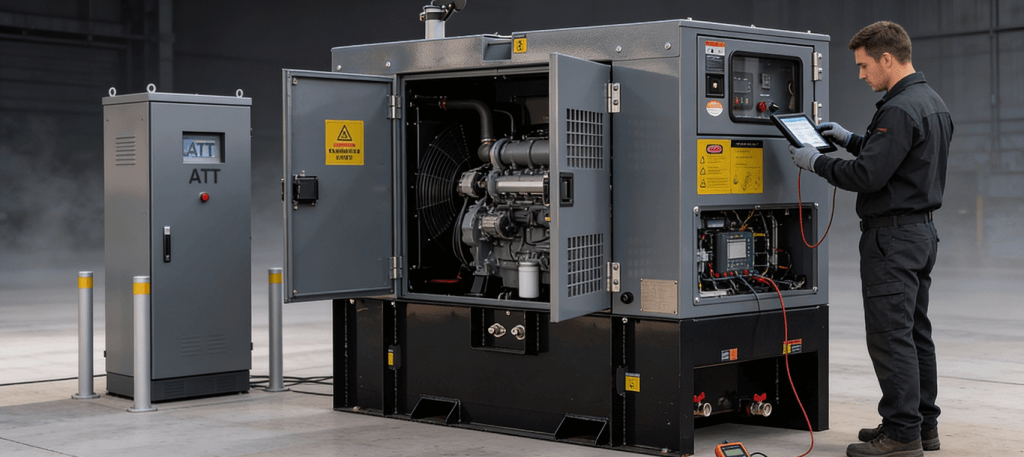
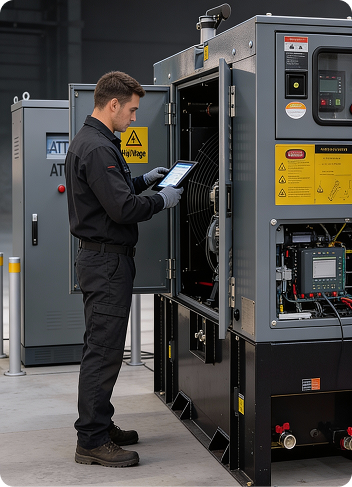
Our engineers completed a load study across conveyors, lighting, HVAC, and IT to size the system with starting currents and diversity in mind. We specified a 250 kVA diesel generator in an IP‑rated acoustic canopy paired with a 400A four‑pole ATS for safe neutral switching.
The scope included an external double‑skinned day tank with bund and leak detection, upgraded earthing with a dedicated earth bar, surge protection at the main board, and bollard protection around the pad. A remote monitoring gateway provides generator/ATS status and fuel level alerts to facilities.
Challenges Faced
Challenges on Ground
The site had a tight footprint with active forklift lanes, leaving little room for a pad and service clearances. A strict boundary noise limit meant acoustic control and vibration isolation were essential. Frequent utility dips required safe neutral switching and fast, automatic transfer, but the changeover had to happen over a single weekend with zero disruption to dock operations. Fuel storage needed to be segregated with spill protection in a busy yard, while existing earthing and surge protection were inadequate for the new system. Finally, the client needed remote status and fuel alerts integrated into their facilities workflows.
Final Result